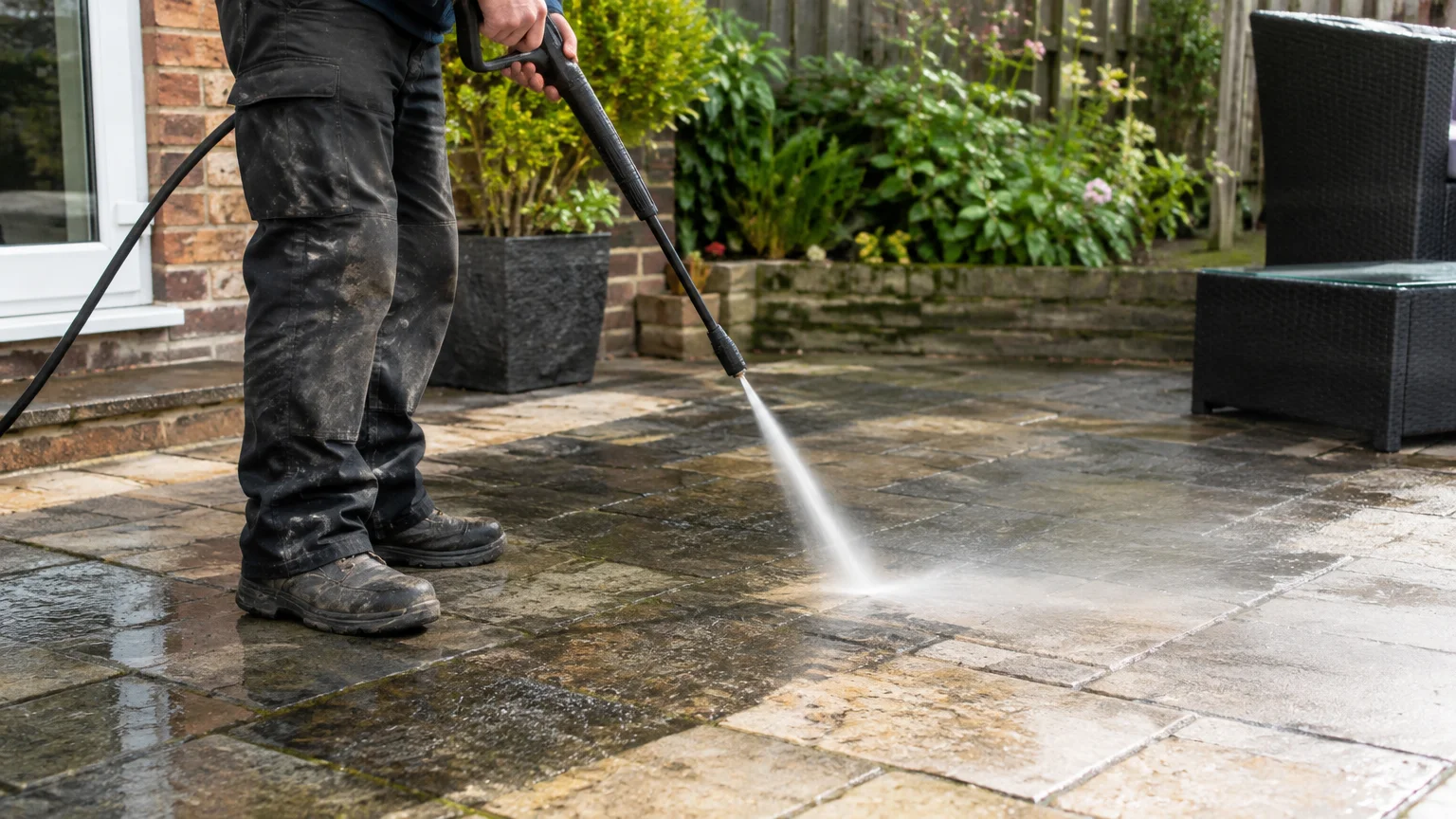
Composite deck cleaning should follow the board maker’s care guide before soap, brushing, or pressure washing begins. Most makers allow mild cleaner, soft tools, and careful rinsing. The safest method depends on the board type, surface finish, stain, and care rules for that product.
A deck can look strong while still having a surface that marks easily. Composite boards mix wood fibers with plastic. Many newer boards also have a protective cap. This cap helps resist stains, but it does not make the deck safe for every cleaner or tool.
Pressure Washing Glendale AZ helps property owners plan safe cleaning before work starts. The same care matters for decks, fences, pool decks, and other outdoor areas in Glendale. It also helps when a property needs related exterior cleaning, driveway cleaning, or concrete cleaning.
Table of Contents

- What does the manufacturer allow for composite deck cleaning?
- Which cleaning solutions are safe for a composite or Trex deck?
- Can you pressure wash a composite deck?
- How should you clean composite decking without damaging it?
- What should you avoid when cleaning Trex and composite decking?
- How do you prepare a composite deck for staining or other maintenance?
- When should you hire a professional for composite deck cleaning?
What does the manufacturer allow for composite deck cleaning?
Most manufacturers allow routine cleaning with water, mild soap, and a soft brush. The exact rules depend on the product line, board age, surface cap, and type of mark. The owner’s care guide should always come before a general deck cleaning tip.
A care guide explains more than the cleaner to use. It may cover brush type, rinse pressure, drying time, and products to avoid. Some guides also explain how to remove grease, mold, pollen, or leaf stains. Check the guide before testing a cleaner in a visible place.
How cleaning guidance differs between composite, PVC, and capped boards
Composite decking mixes plastic with wood fibers. PVC decking is made mainly from plastic. Capped composite boards have a protective outer layer over the core. These materials can look alike, but they may react in different ways to heat, solvents, strong chemicals, or rough tools.
Older uncapped boards may absorb marks more easily. Newer capped boards often resist stains better, yet the surface can still become dull or scratched. The safest method starts with the least force that can remove the dirt.
Why the care instructions for Trex and other brands should come first
Trex publishes care information for its decking products, and other makers publish their own rules. Those instructions can change as products change. A general guide cannot replace the care sheet for the exact boards on a property.
Record the brand and product line when possible. If the information is missing, test a small hidden area first. Pressure Washing Glendale AZ can help Glendale property owners choose a careful process when the deck material or care history is not clear.
Which cleaning solutions are safe for a composite or Trex deck?
A mild soap solution and clean water are often the safest starting point for composite deck cleaning. The cleaner should match the maker’s instructions and be mixed as directed. Stronger products are not always better, and too much cleaner can leave a film.
Test the cleaner on a small hidden section before washing the full deck. Rinse that area well and let it dry. This can reveal color change, clouding, streaks, or other surface problems before they spread.
Mild soaps, manufacturer-approved cleaners, and dilution basics
A mild dish soap may work for everyday dirt when the care guide allows it. An approved deck cleaner may help with tougher marks. Follow the label closely, since a strong mix can harm the surface or nearby plants.
Apply cleaner in small sections. This keeps the surface from drying before rinsing. A soft nylon brush can lift soil from the board pattern. Move the brush along the board instead of across it.
Cleaning products that can stain, dull, or damage the surface
Avoid products that the maker does not approve. Solvents, paint removers, strong degreasers, and concentrated bleach can cause trouble. These products may leave a pale film, change the color, or harm nearby finishes.
Rust removers and tannin treatments need special care. They may work on one surface but harm another. Pool chemicals, fertilizer, and plant treatments should also stay off the deck when possible. If a spill occurs, quick rinsing may limit the mark.
Can you pressure wash a composite deck?
Pressure washing may be allowed for some composite decks, but do not assume every board can handle it. A low-pressure rinse may remove loose dirt when the maker permits it. High pressure, a close nozzle, or a poor spray angle can scar the surface.
Pressure washing differs from soft washing. Pressure washing uses water force to remove soil. Soft washing uses low pressure and cleaner to loosen organic growth. The right choice depends on the material, stain, nearby surfaces, and care rules.
When low-pressure rinsing may be acceptable
Low-pressure rinsing works best for loose pollen, dust, and light dirt. It should not be used to blast stains away. A garden hose may be enough for routine washing, especially when the deck is cleaned before buildup becomes heavy.
Begin with the lowest useful setting. Test the spray in a hidden spot. Keep water away from doors, siding, outlets, and places where it could enter the home.
How nozzle choice, distance, and spray technique affect the boards
A wide spray pattern spreads water over a larger area. A narrow tip focuses force and raises the risk of marks. Never hold the nozzle close to the board or keep it still in one place.
Move the spray in the direction of the boards. Keep the wand moving at a steady pace. Rotary surface cleaners may leave rings or uneven marks, so check the maker’s instructions first. If you are unsure about the setting, stop and choose a gentler method.
How should you clean composite decking without damaging it?
Safe composite deck cleaning starts by clearing the surface, sweeping loose dirt, and checking the care guide. Wash small sections with an approved mild cleaner. Brush each section gently and rinse before the solution dries.
This work is often safe for a homeowner when buildup is light and access is easy. Wear eye protection and shoes with good grip. Keep children, pets, furniture, and plant containers away until the deck is rinsed and dry.
- Remove furniture, leaves, toys, and loose debris from the deck.
- Sweep between boards and inspect loose fasteners or damaged areas.
- Mix an approved cleaner according to its label and care guide.
- Apply the solution to a small section and scrub with a soft brush.
- Rinse from the house outward without forcing water into openings.
- Let the deck dry before checking for missed marks or trapped moisture.
Mold and mildew need more than a quick blast of water. The cleaner must loosen the growth, and the deck must dry well afterward. Grease may need an approved degreaser. Leaf or wood stains may need a product made for that type of mark.
Do not use cleaning to hide a larger problem. Soft or cracked boards, loose rails, lifted fasteners, and damaged trim need attention first. Water can make these issues worse or push moisture into places that are hard to dry.
What should you avoid when cleaning Trex and composite decking?
Avoid aggressive tools, harsh chemicals, and methods that create heat or uneven force. These methods can scratch the cap, dull the finish, or leave hard-to-remove marks. Gentle cleaning with a full rinse is safer.
Why wire brushes, abrasive tools, and rotary surface cleaners can cause problems
Wire brushes can cut or scratch the surface. Abrasive pads may leave dull patches. Even a tool that works on concrete can damage a composite board. A soft nylon brush is usually safer when the care guide allows brushing.
Rotary cleaners can create round patterns when spray pressure is too high. They may also spread dirty water across the deck. If you consider a rotary tool, confirm that the maker allows it and test a hidden area first.
How heat, harsh chemicals, and trapped moisture affect deck materials
Heat can make plastic-based surfaces more likely to show marks. A hot surface may also dry cleaner too fast, leaving streaks. Cleaning during a cooler part of the day can make rinsing easier.
Harsh chemicals may affect the board cap, nearby plants, metal fasteners, or painted surfaces. Trapped moisture can collect under furniture, planters, rugs, and stored items. Lift and dry these items so dirt and moisture do not remain against the boards.
Never mix cleaning products. Some combinations can create harmful fumes or damage the surface. One approved product, used as directed, is safer than a stronger homemade mixture.
How do you prepare a composite deck for staining or other maintenance?
Most composite decking should not be stained, sealed, or painted unless the maker clearly approves that treatment. Composite and capped boards are made to keep their finished look without the coating used on wood decks. An unsuitable coating may peel or change color.
Cleaning should come first. Dirt, mildew, grease, and pollen can stop an approved treatment from bonding. However, a clean deck is not always ready for a coating. Confirm that the product and surface work together.
When composite decking should not be stained, sealed, or painted
The care guide should say whether a treatment is allowed. If it does not, the safest choice is to avoid applying one. A product made for pressure-treated wood or cedar may not work on composite boards.
Some owners mistake faded composite decking for unfinished wood. Fading can be part of normal weathering. A coating may hide the change for a short time, but it can create a larger maintenance problem later.
What to inspect after cleaning before applying any approved treatment
Let the deck dry fully after washing. Check for stains, loose boards, damaged fasteners, soft areas, and water that does not drain. Make repairs before using an approved treatment.
Check the surface in changing light, too. Wet boards can hide streaks and dull spots. Once dry, review the deck from several angles. Pressure Washing Glendale AZ works with property owners who need help deciding whether cleaning alone is the right next step.
When should you hire a professional for composite deck cleaning?
A professional can help when the deck has heavy growth, grease, widespread stains, poor access, or unknown materials. Professional help is also useful when a homeowner lacks safe equipment or cannot control runoff. The goal is not maximum pressure. The goal is clean boards without surface damage.
A homeowner does not need a professional for every rinse or light sweep. Simple upkeep is often safe when the deck is sound and the care guide is clear. Professional service becomes more useful when the work needs careful chemical control or experience with several surface types.
Signs that cleaning may require specialized equipment or experience
A professional may be the better choice when:
- Mold or mildew covers large areas or returns soon after cleaning.
- Grease, rust, tannin, or unknown stains resist mild cleaning.
- The deck sits above finished walls, landscaping, or sensitive drainage.
- Boards are damaged, faded, cracked, loose, or hard to identify.
- The owner is unsure whether pressure washing is allowed.
A careful provider should inspect the material before starting. The provider should explain the cleaner, pressure level, spray distance, runoff plan, and test area. Clear answers are more useful than claims that every deck can be cleaned the same way.
What to ask a local deck cleaning professional before work begins
Ask which product line the provider believes is installed. Ask whether a hidden test will be done and how nearby plants will be protected. The provider should explain how the deck will be rinsed and how damaged boards will be handled.
A local team should not promise that every mark will disappear. Some stains change the surface permanently. Pressure Washing Glendale AZ can help homeowners across Glendale review the safest plan for a composite or Trex deck.
Key takeaways
- Follow the exact manufacturer care guide before cleaning.
- Start with mild soap, soft tools, and the least force needed.
- Use pressure only when the maker allows it and the operator can control it.
- Avoid wire brushes, harsh chemicals, narrow spray tips, and trapped moisture.
- Do not stain, seal, or paint composite boards unless the maker approves it.
Conclusion
Composite decking needs careful cleaning, not the strongest possible wash. A mild cleaner, soft brush, controlled rinse, and full drying period can protect the boards during routine care. When stains, access, or material questions make the job uncertain, an experienced deck cleaning team can reduce the risk of damage.
Contact us to discuss safe composite deck cleaning for your property.
Frequently Asked Questions
Can a homeowner clean a composite deck?
Yes. A homeowner can usually sweep, rinse, and remove light dirt with an approved mild cleaner. The deck should be sound, easy to access, and cleaned according to the maker’s guide. Professional help is safer for heavy growth, unknown stains, poor drainage, high areas, or boards that may already be damaged.
What is the safest way to clean a Trex deck?
The safest method is to clear the deck, sweep loose debris, apply an approved mild cleaner, scrub gently with a soft brush, and rinse well. Work in small sections and do not let cleaner dry. Check Trex care instructions because product lines can have different rules.
Can pressure washing damage composite decking?
Yes. Too much pressure, a narrow nozzle, close spray distance, or a still wand can mark composite boards. Some makers allow controlled low-pressure rinsing, but others may set different limits. A hidden test and wide spray pattern help reduce risk when pressure washing is allowed.
Should composite decking be sealed after cleaning?
Usually, composite decking should not be sealed unless the maker approves the product. Many boards are designed to keep their finish without a wood-deck coating. A sealant may peel, change the color, or create warranty concerns. Check the care guide before applying any treatment.
How often should composite decking be washed?
The right schedule depends on shade, trees, weather, foot traffic, pets, and nearby plants. Light sweeping should happen as needed, especially after leaves collect. Wash when dirt becomes visible or before buildup hardens. Clean sooner when mold or slippery growth appears.
If you are unsure what you are dealing with, an inspection before cleaning can help prevent a larger problem. Pressure Washing Glendale AZ can help you understand the safest next step for your deck.
If you are not sure what you are dealing with, it is worth having someone look at it before it turns into a bigger job. Get in touch with Pressure Washing Glendale AZ today and we will tell you where you stand.